
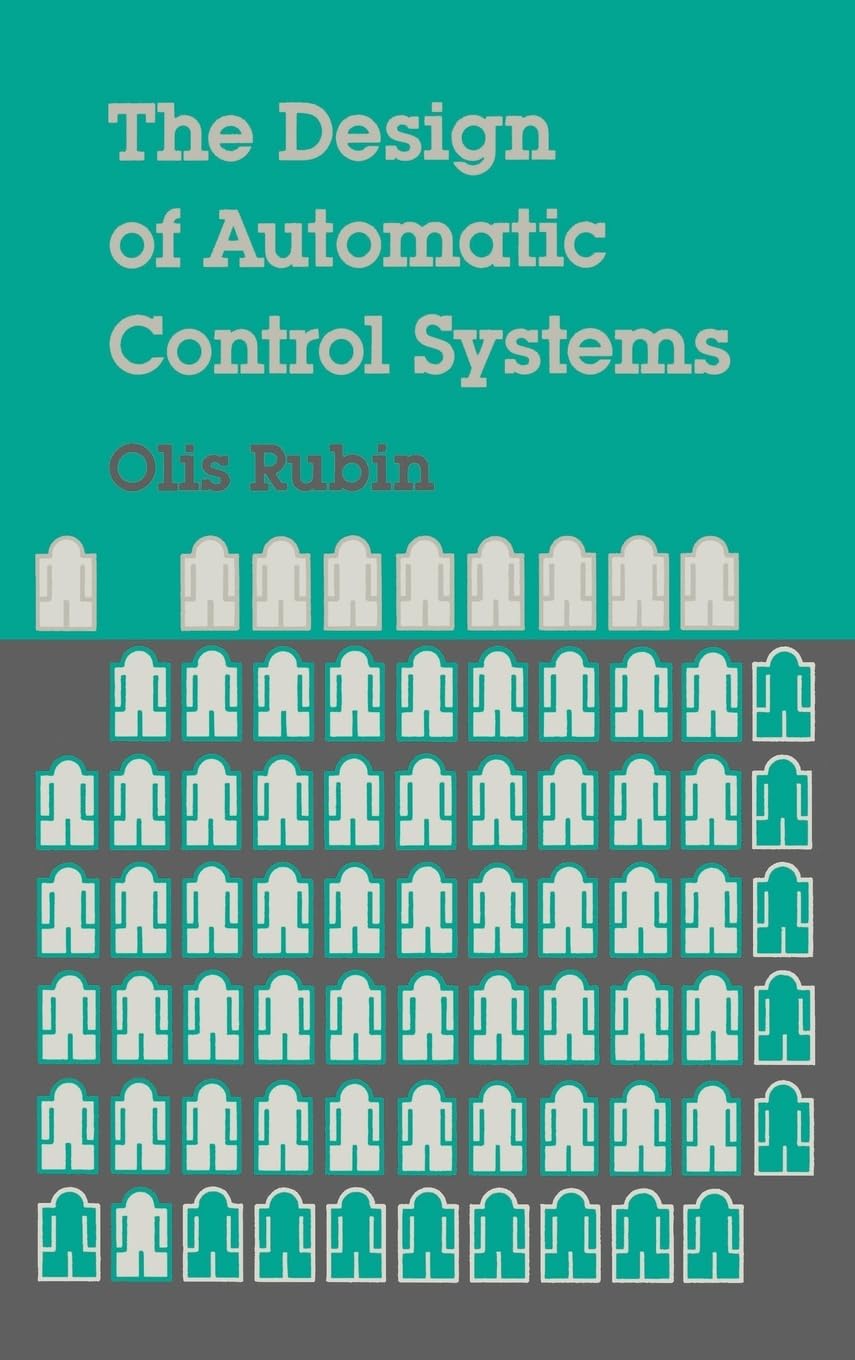
📘 In-Depth Review: The Design of Automatic Control Systems by Rubin & Olis
🔍 Overview of The Design of Automatic Control Systems
📚 First published on December 1, 1986, The Design of Automatic Control Systems by Rubin and Olis is a substantial contribution to the fields of automation, robotics, and electronic defense systems. Released by the esteemed Artech House Publishers, this 400-page volume dives deep into the principles underpinning automatic control systems.
🛠️ Intended for professionals and students alike, this book belongs to the Artech House Communication & Electronic Defense Library, situating it squarely within high-level technical literature. The book’s physical dimensions (6.38 x 1.28 x 9.33 inches) and 1.8-pound weight make it a solid, durable resource suitable for frequent referencing in academic or professional libraries.
📈 While it holds a moderate Best Sellers Rank (#5,457,923 in Books overall, but notably #2,468 in Robotics & Automation), its niche focus ensures it remains a relevant cornerstone for students and engineers invested in understanding control systems’ complex architecture.
⚙️ Content and Scope: Detailed Exploration of Control Systems
🧠 At its core, The Design of Automatic Control Systems explains foundational concepts and advanced methodologies essential for the design and implementation of automatic control systems used in various industries. The authors Rubin and Olis provide readers with a balanced mix of theoretical frameworks and practical case studies, making for a well-rounded reading experience.
📊 The detailed coverage includes system modeling, feedback theory, stability analysis, and controller design, alongside applications in robotics and electronic defense. This breadth ensures the book appeals not only to electrical engineers but also to specialists working within interdisciplinary environments involving automation technologies.
🔍 Despite being published over three decades ago, many concepts presented remain timeless in control theory, particularly those related to classical control techniques and early automation strategies. Readers looking for modern computational techniques or current software tools might find this work somewhat dated, yet the fundamental principles remain as relevant as ever.
📖 Author Credentials and Publisher Reputation
👨🏫 Authors Rubin and Olis bring substantial expertise to this publication, evident in the book’s thorough explanations and structured approach. Their background in control systems and electronic defense aligns well with the technical depth and complexity found throughout the chapters.
🏛️ Published by Artech House Publishers, a name synonymous with trusted, cutting-edge technical books, the book benefits from rigorous editorial standards. Artech House specializes in communications, defense, and electronic systems literature, establishing credibility and providing readers confidence in the quality and accuracy of the content.
📚 Structure and Readability: How the Book is Organized
🗂️ The 400 pages of the book are neatly organized into digestible sections, each building upon the last to foster a progressive understanding of automatic control system design. The writing style balances technical rigor with clarity, enabling readers with a fundamental background in engineering to grasp complex concepts effectively.
💡 Throughout the volume, Rubin and Olis employ diagrams, mathematical models, and practical examples that help bridge theory and application. This integration enhances comprehension and keeps readers engaged, which is crucial given the density of the subject matter.
✍️ However, readers should be prepared for a deep dive into technical content that expects a certain level of prior knowledge in engineering, control theory, or systems design. Beginners may find the text challenging but rewarding with sufficient dedication.
💼 Target Audience: Who Will Benefit Most?
🎓 Primarily, this book is tailored for graduate students, academics, and practicing engineers specializing in robotics, automation, electrical engineering, and defense systems. The detailed theoretical background supports university curriculum and research efforts, while the practical design considerations enrich professional practice.
🤖 Robotics professionals will find significant insights, given the book’s ranking (#2,468) in Robotics & Automation categories. It offers historical context and foundational knowledge invaluable for designing or optimizing control loops and systems integral to robotics applications.
⚙️ Engineers working in electronic defense fields will also appreciate this book’s emphasis on communication and control elements within defense technology architectures, a niche but critical domain requiring precise control methodologies.
🔧 Pros and Cons: Balancing Strengths and Weaknesses
👍 Pros:
- 🔬 Comprehensive coverage of automatic control theories and their practical applications.
- 📖 Well-organized structure that logically builds complex ideas.
- 🛠️ Suitable as both a textbook and a professional reference.
- 🔐 Credibility backed by knowledgeable authors and reputable publisher.
- 🖼️ Clear diagrams and mathematical models enhance understanding.
👎 Cons:
- ⏳ Some content may appear dated due to original publication in 1986, especially regarding software tools and computational advancements.
- 📉 The book’s niche appeal limits broader popularity, reflected in modest overall best-seller rankings.
- 🧩 May be challenging for readers without a solid engineering background or familiarity with control theory.
📏 Physical Attributes and Additional Details
📦 At 1.8 pounds, the book offers a sturdy physical presence unmatched by many thin manuals or pocket guides. Its dimensions make it portable enough to carry yet comprehensive enough to contain extensive knowledge.
🔖 The ISBN identifiers, 0890062188 (ISBN-10) and 978-0890062180 (ISBN-13), allow easy cataloging and quick procurement from libraries or retailers.
🌍 Printed in English, the language remains accessible to a broad international audience, particularly in academic and technical communities worldwide.
🤔 Final Thoughts: Is The Design of Automatic Control Systems Worth Reading?
💡 For those seriously interested in the engineering principles behind automatic control in robotics, defense, or automation, The Design of Automatic Control Systems by Rubin and Olis stands as a valuable, enduring resource. Its deep dive into design theories, combined with practical applications, equips readers with timeless insights into one of engineering’s vital subfields.
🔧 Despite being published several decades ago, the core explanations remain relevant, particularly for foundational knowledge. Modern readers may want to supplement this book with more recent texts for the latest digital tools, but the fundamental understanding here cannot be overstated.
📈 This book is a strong recommendation for graduate students, engineers, and academics seeking a comprehensive textbook or reference guide that grounds them firmly in the theory and design of automatic control systems.
